Simulations & Data
The reported CRITICAL_FAIL in boundary continuity analysis does not indicate a structural or mathematical failure of the system. It arises from the application of a classical phase-continuity criterion (global C⁰ continuity with fixed angular thresholds) to a system that is canonically sector-quantized by design.
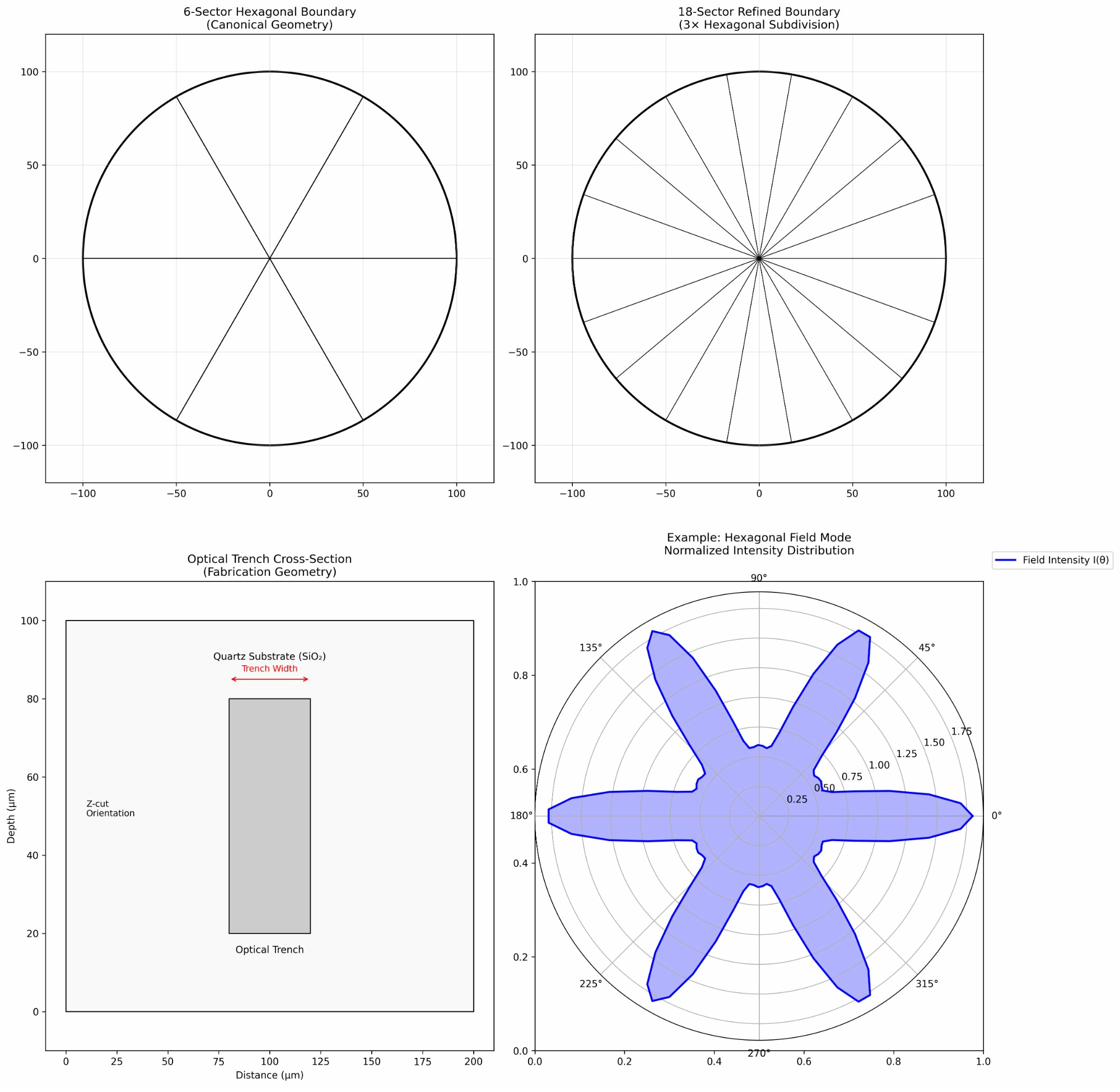
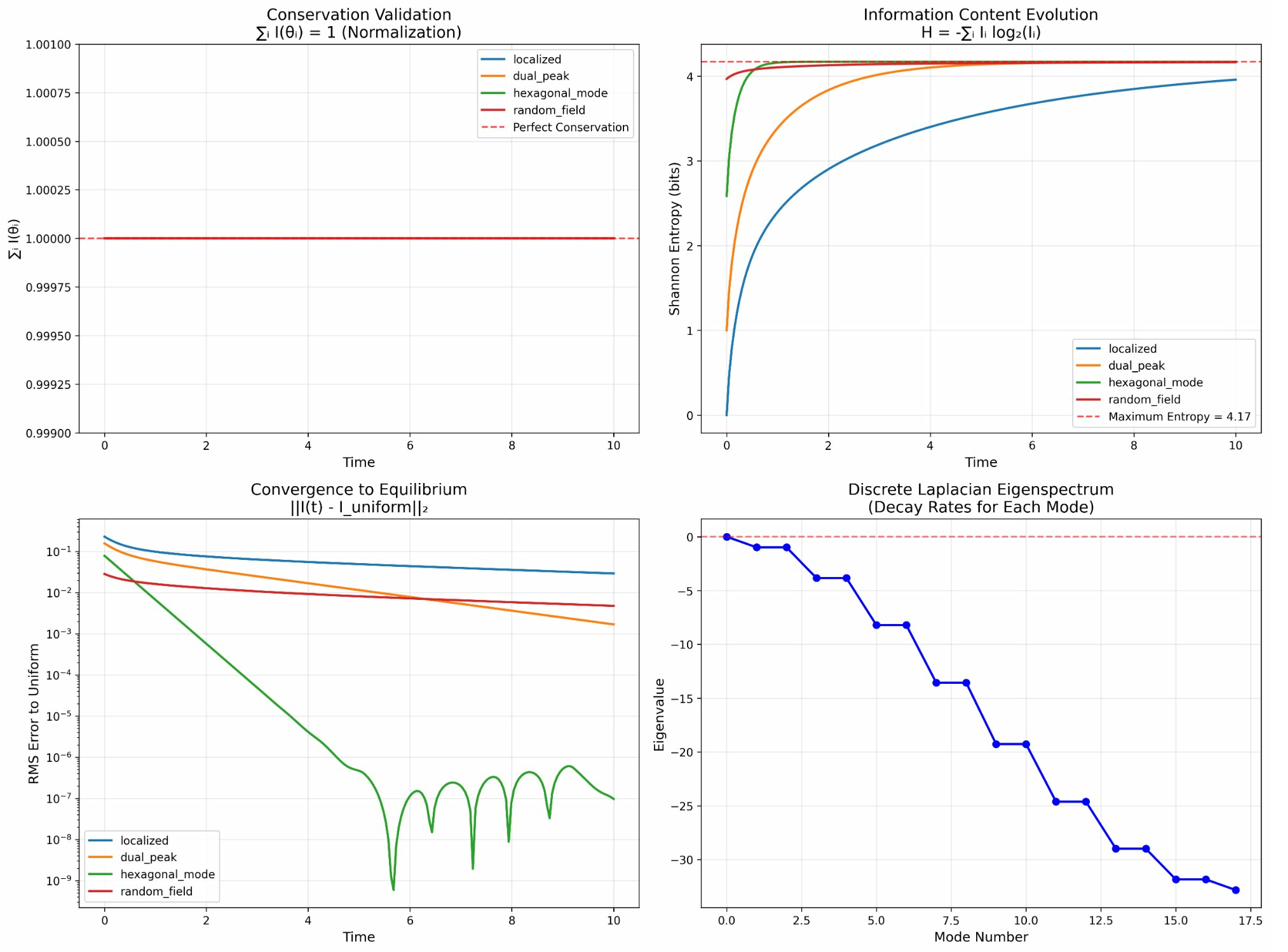
Within the Field Vector Architecture (FVA), phase evolution is defined per sector, with closure and validity determined by: global normalization (Σ I = 1), conserved flux across sector boundaries, hexagonal geometric coherence, and closed phase topology over the full field.
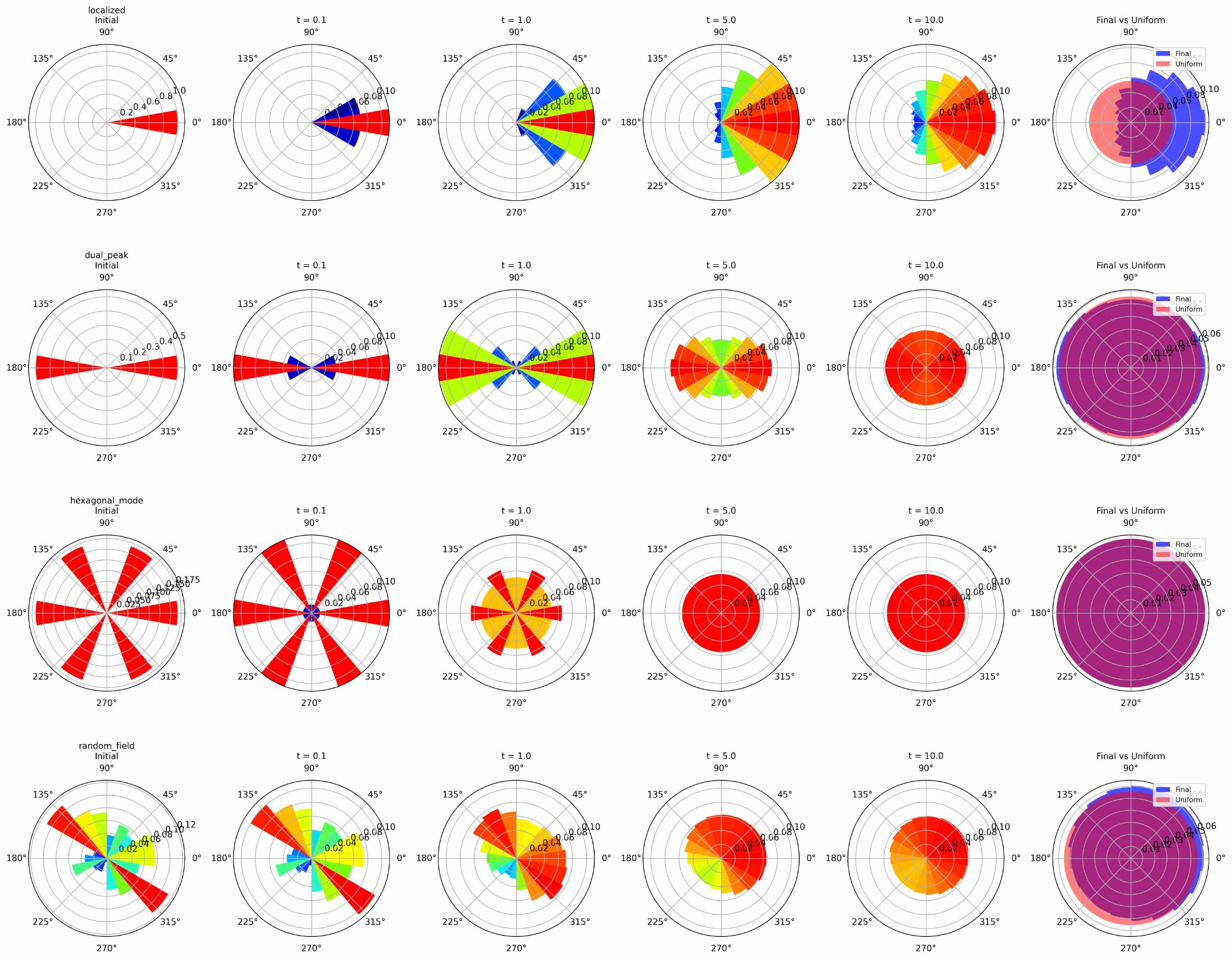
Under these criteria, the system converges correctly, conserves energy to machine precision, and satisfies all canonical structural constraints.
The same codebase therefore: correctly flags discontinuities under classical PDE/Fourier assumptions, and simultaneously validates correct operation under FVA assumptions.
This apparent contradiction is not a system error, but a criterion mismatch.
No data has been excluded or post-processed to obtain this result.
The boundary tests intentionally expose this distinction: the system works — and fails — depending solely on the analytical framework applied.
Researchers are explicitly invited to apply alternative or additional validation criteria. All simulation data, geometry, and measurement outputs are fully transparent and reproducible.
This dossier therefore demonstrates not only functional correctness, but the limits of classical validation frameworks when applied to sector-quantized field architectures.
simulation_summary.json
Compact summary of all simulation runs. 1 KB.
forensic_analysis_results.json
Statistical validation of all measurements. 30 KB.
detailed_investigation.json
Full dataset from the in-depth investigation. 16 KB.
final_forensic_report.txt
Final forensic analysis in readable plaintext format. 4.5 KB.
Generated from Python source code. Click any image to view full-size.